You play the cello sitting down, with it resting against you, so it can feel comfortable from the very first day. These free lessons take you from setting it up safely to playing your first tune, one small step at a time, and show you how to keep your cello healthy along the way.
Need an instrument? Students who can't afford one can apply to us.
Free tutoring is something we're planning for the future. Until then, these free lessons
are the place to start.
Getting started on the cello when you have no teacher yet
Sarah Joy · YouTube
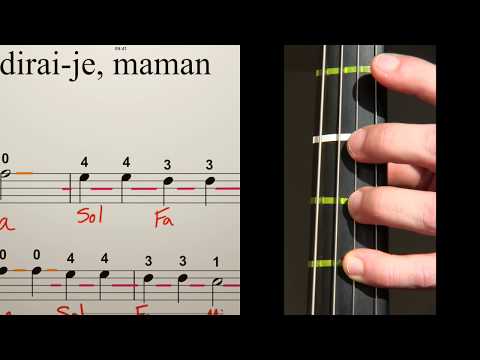
A cellist made this for people with no idea where to begin, to get them through their first week of practice. About 25 minutes, so watch it in parts. You don't need the paid sheet-music app mentioned in its description.
Someone from a string shop shows how to tune with a digital tuner, using the fine tuners first and the pegs only when a string is far out. About 8 minutes.
Wiping off rosin, loosening the bow, closing the case properly, keeping the cello away from heat, and why cracks go to a repairer. If a peg sticks or slips, ask an adult or a music shop to help.
A string shop technician shows how to replace a string, made by a string maker for students and parents. Change one string at a time so the bridge stays up, and ask an adult to help the first time.
Public domain (published 1839; English edition 1900). Short exercises that build up step by step; choose the 1900 G. Schirmer edition, which has English text.
Easy arrangements such as Ode to Joy, given away by the publisher on its own site with no sign-up. Start with the Level 1 pieces; you can ignore the paid bundle advertised on the page.
How to pick a regular time and a quiet place, and set a clear goal each time you practice so you improve faster.
Keeping your cello playing
The small things that wear out or keep the instrument working. You don't need all of
them on day one, and any music shop can help you pick the right size.
Rosin
Gives the bow hair its grip on the strings. Rub a little on before you play; one cake lasts a year or more.
Strings wear out and sometimes snap, and the thin A string is the one most likely to go. Buy the size that matches your cello, such as 4/4, 3/4 or 1/2.
A soft tube with a damp sponge inside that goes through the f-hole and stops the wood drying out when the heating is on in winter. Squeeze out the extra water and wipe it dry so it never drips inside, and re-wet it every few days.
Pairing students with volunteer tutors is something we're planning for the future.
Until then, the free lessons on this page are what we'd like you to learn from. They
belong to the people who made them; we link to them because they're free and they
teach well.