
All about the drums: the parts of the kit and what each does
My Music Workshop · YouTube
A short lesson made for children that names each part of a drum kit and explains what it is for.
A drum kit is big, loud and a lot of fun. These free lessons show you how to set it up to fit you, hold the sticks, play your first beat and read simple drum music, and how to look after your drums and your ears along the way.
Need an instrument? Students who can't afford one can apply to us. Free tutoring is something we're planning for the future. Until then, these free lessons are the place to start.
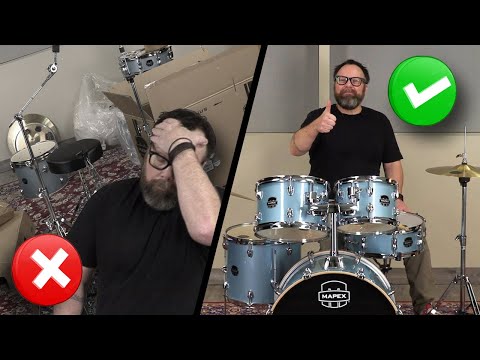
Learn the names of the drums and cymbals, then put the kit together.
My Music Workshop · YouTube
A short lesson made for children that names each part of a drum kit and explains what it is for.
Long & McQuade Musical Instruments · YouTube
A music shop's drum specialist builds a new kit from the box to a first tuning. About 38 minutes, with timestamps so you can jump to each stage.
Drums are tuned by turning the small rods around the edge with a square drum key.
Yamaha Musical Instrument Guide
A diagram showing how to tighten opposite rods in turn so the head stays even and free of wrinkles.
EVANS Drumheads · YouTube
A drumhead maker's four-minute guide to tuning a snare drum with a drum key.
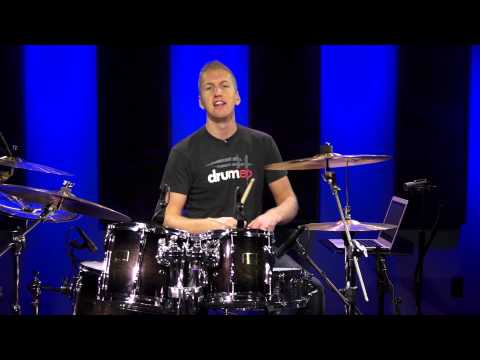
Drumeo · YouTube
A long-time drum teacher tunes each drum in turn. About 19 minutes, with timestamps for each drum.
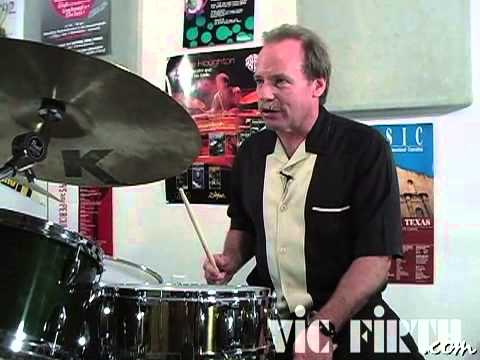
Set the kit to fit you, not the other way round. Move the stool, pedals and snare until you can reach everything without stretching.
Vic Firth · YouTube
Steve Houghton, a drummer and university percussion professor, shows how to arrange the kit around you. Part of a beginner series based on his drum course for kids.
Zildjian Drum Set Method
A free video lesson and printable page from a cymbal maker on how high to sit, where to put the snare or pad and how to hold the sticks.
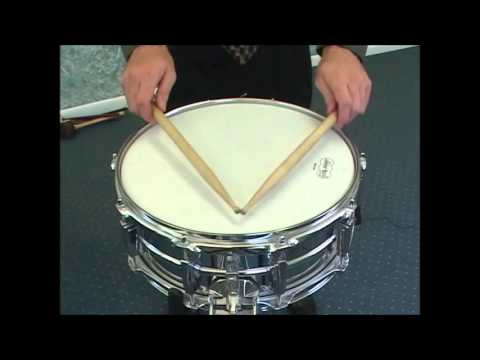
Drumeo · YouTube
An eight-minute lesson on matched grip, where both hands hold the sticks the same way.
Rudiments are short sticking patterns, a bit like scales for drummers. Practice them slowly with a metronome.
Percussion Solutions for Band Directors · YouTube
The first lesson of a school percussion method: how to hold the sticks and play the basic strokes. About 9 minutes.
Vic Firth · YouTube
Right, left, right, left: the first rudiment, broken down slowly by Dr. John Wooton of Vic Firth's education team.
Vic Firth · YouTube
Two strokes with each hand, explained step by step by the same teacher.
Vic Firth · YouTube
The pattern right, left, right, right, then left, right, left, left, explained step by step.
Vic Firth · YouTube
A three-minute lesson from Steve Houghton's beginner series, based on his drum course for kids, that teaches a first simple beat.
Drumeo · YouTube
A seven-minute first lesson that gets you counting and playing a simple beat.
Drum Beats Online · YouTube
Three simple rock beats for hi-hat, snare and bass drum. About 10 minutes.
Zildjian Drum Set Method
A cymbal maker's step-by-step course, from your first beat to fills, with a video and a printable page for each lesson and no sign-up.
Drum music uses the same five lines as other music, but each line or space stands for a drum or cymbal. Cymbals are usually written with an x.
drumlessonscom · YouTube
How to count 1, 2, 3, 4 and read the simplest rhythms in drum music.
Zildjian Drum Set Method
Explains the staff, the percussion clef, which line stands for the snare, bass drum and hi-hat, and how long each note lasts, with a video lesson and a free printable page of reading exercises.
musictheory.net
Short animated lessons that work on a phone and need no account. For drummers, the lessons on note duration, measures and time signatures, rests, and dots and ties matter most.
National Institute on Deafness and Other Communication Disorders
A U.S. government health page explaining that loud sound, including playing in a band, can damage hearing for good, and that earplugs or earmuffs help prevent it.
EVANS Drumheads · YouTube
A drumhead maker takes off the old head, fits a new one and tunes it, in about four minutes.
SABIAN
A cymbal maker explains felts and sleeves, why not to overtighten, gentle cleaning and checking for cracks.
Zildjian Drum Set Method
Given away free by Zildjian on its own site. After a few introduction pages come eight pages of written-out beats from its beginner method, starting with simple quarter-note and eighth-note beats; the later pages get much harder. Each lesson of the course also has its own free printable page.
Percussive Arts Society
Given away free by the Percussive Arts Society on its own site. The standard chart of rudiments; start with the single stroke roll, double stroke roll and single paradiddle.
Musicca
Keeps a steady click so you can practice beats and rudiments in time.
Musicca
Short exercises for reading and tapping back rhythms, starting with whole, half and quarter notes, then eighth notes. An account is only needed for the leaderboard.
My Drum School · YouTube
A practice pad lets you work on sticking quietly, without the full kit. This is a four-minute lesson on getting started with one.
Yamaha
An instrument maker explains the main ways to practice more quietly: rubber mutes that sit on top of the drums and cymbals (the sticks bounce back less on them, so you work a little harder), low-volume cymbals full of small holes, mesh drumheads and practice pads. It also mentions Yamaha's own electronic gear, which you don't need.
The small things that wear out or keep the instrument working. You don't need all of them on day one, and any music shop can help you pick the right size.
Earmuffs or musicians' earplugs that cut the volume while you play, in a size that fits a child. Wear them every time; replace earmuffs when the cushions split.
A common choice: Vic Firth Kid's Ear Protection Earmuffs
Sticks chip and splinter with use. Replace a pair when the tip cracks or the wood frays, which can be every few weeks or every few months. Very young players, about 3 to 8, may find shorter kids' sticks easier to hold.
A common choice: Vic Firth American Classic 5A drumsticks
The small square key that turns the tuning rods on every drum. It is easy to lose, so keep a spare.
A common choice: Evans Magnetic Head Drum Key
A quiet rubber pad for practicing sticking without the full kit. One pad lasts for years.
A common choice: Vic Firth Single-Sided Practice Pad, 12 inch
The top snare head wears out first, often after a year or so of regular practice. Buy the same size as the old head; the size is usually printed near its edge. Most full-size snare drums are 14 inches, but junior kits often have smaller ones.
A common choice: Evans G1 Coated snare batter drumhead
The soft washers and plastic tubes that stop a cymbal touching the metal stand. Replace them when they flatten, split or go missing.
Rubber pads that sit on the drums and cymbals to make the kit much quieter for practice at home. Buy sizes that match your drums.
A common choice: Vic Firth Drum & Cymbal Mute Prepack
Bundles of thin dowels used instead of sticks to play more quietly. Replace them when the bundle starts to split.
A common choice: ProMark Hot Rods
A drum stool that goes up and down so a growing player can sit at the right height. Needed only if the kit came without one.
Pairing students with volunteer tutors is something we're planning for the future. Until then, the free lessons on this page are what we'd like you to learn from. They belong to the people who made them; we link to them because they're free and they teach well.
Print the care card One page to keep with your drum kit: the "Before you start" list and a code that leads back here.
We don't control these sites, so things can move or change. Links last checked November 15, 2026. Found a broken one? Tell us at [email protected].
Other instruments: ViolinViolaCelloAcoustic GuitarElectric GuitarBass GuitarUkuleleFluteClarinetAlto SaxophoneRecorderTromboneKeyboard