What's in the case and the names of the parts
Dr. Selfridge Music · YouTube
A band teacher opens the case and names each part, so later lessons make sense.
Almost everyone squeaks on the clarinet at first, and that's normal. These free lessons take you from opening the case to playing your first tune, one small step at a time, and show you how to look after your clarinet and reeds along the way.
Need an instrument? Students who can't afford one can apply to us. Free tutoring is something we're planning for the future. Until then, these free lessons are the place to start.
Watch these before you play a note. Wet the whole reed in your mouth while you put the clarinet together, because a dry reed won't play well.
Dr. Selfridge Music · YouTube
A band teacher opens the case and names each part, so later lessons make sense.
Dr. Selfridge Music · YouTube
How to put the reed and ligature on the mouthpiece and fit the mouthpiece onto the barrel.
Yamaha Music Australia · YouTube
From Yamaha's "Off to a Great Start" videos for new players: how to put the clarinet together, clean it and keep it in good condition.
Jenny Clarinet
A clarinetist's step-by-step checklist, including lining up the bridge key, with a photo of where the reed should sit.
Play for a minute to warm up first. If a tuner says you're too high (sharp), pull the barrel out a tiny bit; if you're too low (flat), push it in.
MacPhail Center for Music · YouTube
A lesson from a nonprofit community music school on checking your tuning and adjusting the clarinet.
Jenny Clarinet
Explains which joint to pull out or push in and which notes to check; the later parts are for more advanced players.
Dr. Selfridge Music · YouTube
How to hold the clarinet in playing position and where each finger rests.
Clarinet Mentors (Michelle Anderson) · YouTube
A clarinet teacher shows where your right thumb and hand should sit so the clarinet is easier to hold and play.
Yamaha Musical Instrument Guide
Diagrams of where not to grip it, how to hold it, and how much mouthpiece to take in, from an instrument maker's beginner guide.
Start on just the mouthpiece and barrel. Squeaks are part of learning, and they get fewer with practice.
Dr. Selfridge Music · YouTube
How to shape your mouth around the mouthpiece and make your very first sound.
United States Navy Band · YouTube
A clarinetist in the U.S. Navy Band leads a first lesson for new players.
BasicBand · YouTube
A short lesson on starting notes with your tongue, from a free beginner band course.
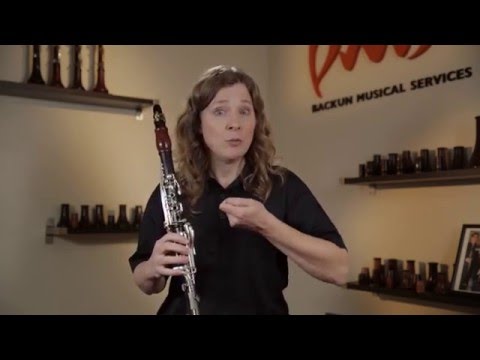
Backun Musical Services · YouTube
A clarinet teacher explains why clarinets squeak and what to check when it happens. Made for band teachers, but easy to follow.
Dr. Selfridge Music · YouTube
A band teacher shows the fingering for each of the first three notes.
Mrs. Allen · YouTube
A band director shows the fingering for each of the five notes, with reminders about your mouth shape.
Vandoren (DANSR)
A one-page chart from a reed maker showing each note on the staff and the keys to press. The download needs no account.
Clarinet City - Paula Corley · YouTube
Simple tunes that use only the first few notes, so you can play a song before you read music.
Clarinet music is written in the treble clef. The clarinet is a B-flat instrument: when you play a written C, it sounds like a B-flat on a piano. Always use music written for B-flat clarinet.
Music with Ms. Watson · YouTube
An elementary music teacher's animated lesson on the staff and how to name the notes on the lines and in the spaces.
musictheory.net
Short animated lessons that work on a phone and need no account. Start with the first few.
Most beginners start on a soft reed, around strength 2 or 2.5. Bent or sticking keys, leaking pads and cracks are jobs for a repair shop, so don't try to bend keys back yourself.
Backun Musical Services · YouTube
Why you dry the inside after playing and how to pull the swab through. Made for band teachers, but clear for families.
Yamaha Musical Instrument Guide
Taking off the reed, swabbing, drying the pads and when to use cork grease, from an instrument maker.
Backun Musical Services · YouTube
A clarinet teacher explains which reeds suit students who are just starting out. Made for band teachers, but clear for families.
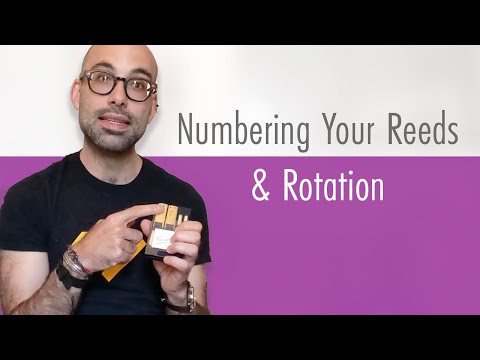
VandorenUSA · YouTube
From the reed maker Vandoren: why you take turns using several reeds, how to number them and how to store them.
IMSLP
Public domain (1898 Carl Fischer edition, in English); choose that edition, because the 1946 revision is still under copyright in the US. An old, very complete method that gets hard quickly, so use the early pages alongside the videos.
LibreTexts
Openly licensed (CC BY 3.0). A free textbook by Catherine Schmidt-Jones; start with the first chapter, on reading notes.
Musicca
Listens through your phone's microphone. It shows piano pitch, so your written C will show as B-flat.
musictheory.net
A quick game for learning to name notes on the staff. Set it to treble clef.
The small things that wear out or keep the instrument working. You don't need all of them on day one, and any music shop can help you pick the right size.
The thin piece of cane that makes the sound. Reeds wear out and chip, so keep three or four and replace each one when it stops sounding good, often every few weeks.
A common choice: Rico Organic Bb Clarinet Reeds
Holds spare reeds flat and protected so they don't warp or chip. One case lasts for years.
A common choice: Vandoren Quad Pack reed case
A cloth on a string that you pull through the clarinet after every practice to dry the inside. Choose one with no bare metal on the weight, which can scratch the inside, and replace it when it gets worn.
Helps the joints twist together without tearing the corks. One small tube lasts a long time.
A common choice: Vandoren cork grease
Small rubber stickers for the top of the mouthpiece that protect it from teeth marks. Replace one when it wears through.
A common choice: Vandoren mouthpiece cushions
Covers the reed and mouthpiece tip whenever you stop playing. A plastic cap is less likely to chip the reed than a metal one, and caps are easy to lose, so a spare is useful.
A soft rubber cover for the thumb rest that stops the right thumb getting sore. Replace it if it splits.
Shows whether a note is too high or too low, so you know which way to move the barrel.
Pairing students with volunteer tutors is something we're planning for the future. Until then, the free lessons on this page are what we'd like you to learn from. They belong to the people who made them; we link to them because they're free and they teach well.
Print the care card One page to keep with your clarinet: the "Before you start" list and a code that leads back here.
We don't control these sites, so things can move or change. Links last checked November 15, 2026. Found a broken one? Tell us at [email protected].
Other instruments: ViolinViolaCelloAcoustic GuitarElectric GuitarBass GuitarUkuleleFluteAlto SaxophoneRecorderTromboneKeyboardDrum Kit